HVAC
When, where and how to bridge the HVAC clean air gap
HVAC filtration was designed to protect machinery. Pulling fine and ultrafine particles out of a room was never its job.
Read the articleBrio 650 · In-room air purifier
A HEPA purifier slows down as its filter fills. Brio 650 charges fine and ultrafine particles, down to 0.01 microns, and pulls them out of the airstream. It keeps 90% or more of its clean air delivery where HEPA units fall to half.

Inside Brio 650
Air enters through the raised 360° intake. The pre-filter stops visible dust, debris and pet hair.
Ionizing wires give fine and ultrafine particles an electrostatic charge.
Charged particles leave the airflow and lodge in dense foam plates. They stay there, and the air keeps moving.
A catalytic layer reduces ozone and VOCs before clean air returns to the room.
Serrated blades, shaped after an owl's feathers, move 510 cubic feet a minute at 53 dB(A).
One APART cartridge holds peak performance for 12 months or more. Then it slides out by hand and a new one slides in. No tools.
3D model built to published dimensions. Internal layout simplified.
Sound and energy
Fan speed
220CFM
Airflow 43%
197CFM
Clean air delivery 58%
39dB(A)
Sound
18W
Power 24% of a 75 W bulb
Airflow, sound and power from the Brio 650 specification sheet. Clean air delivery by speed, the quiet office range and the large-room purifier range are Agentis Air's published figures. Percentages are shares of the speed 4 figure.
0 particles in view0% captured
Performance over time
A HEPA filter cleans by forcing air through a mat that clogs by design. Airflow drops as the mat fills, and clean air delivery drops with it. Brio lifts particles out of the airstream and stores them in the cartridge, so the fan is never pushing against a loaded filter.
In dust-loading tests against similarly sized HEPA purifiers, only Brio held 90% of its original clean air delivery rate. Under identical conditions the HEPA units fell to 50% or less.
Clean air delivery vs dust load
0.01µm
Smallest particles captured. That is 10 nanometers, too small for standard office HVAC filters.
450CFM
Pollen CADR, measured by Intertek to AHAM/ANSI AC-1. Dust 369, PM2.5 340, smoke 313.
39dB(A)
Sound level at speed 1. Flat out it reaches 53.
1,000sq ft
Cleaned in 20 minutes, the figure Agentis Air gives in its Brio 650 product film.
Quiet by design
An air purifier only works while it runs, and people switch off the loud ones. Most large-room purifiers reach 60 to 70 dB(A) at full speed. Brio 650 tops out at 53, inside the range of a quiet office. Every 10 dB(A) less is a tenth of the sound energy.
Comb-like serrations on an owl's feathers scatter the sound of moving air. Brio's vane-axial fan carries the same serrated edges, shaped through CFD modeling, wind tunnel runs and sound chamber tests. APART adds almost no backpressure, so the brushless DC motor works less, and the sound profile has no pure tones.

What it removes
Independent testing
IntertekAHAM/ANSI AC-1
Pollen 450 CFM, dust 369, PM2.5 340, smoke 313. Rapid removal of PM2.5, smoke and ultrafine particles.
Report, PDFARE LabsEfficacy and safety
Brio 650 qualifies as an equivalent clean air source for the control of infectious aerosols.
Report, PDFULUL 2998
Validated to emit no ozone. The Refresh Plus catalyst also removes ozone that drifts in from outdoors.
Report, PDFARE LabsMS2 bioaerosol
Tested with MS2, a SARS-CoV-2 surrogate. MS2 clean air delivery of 407 CFM.
Report, PDFWhere it works
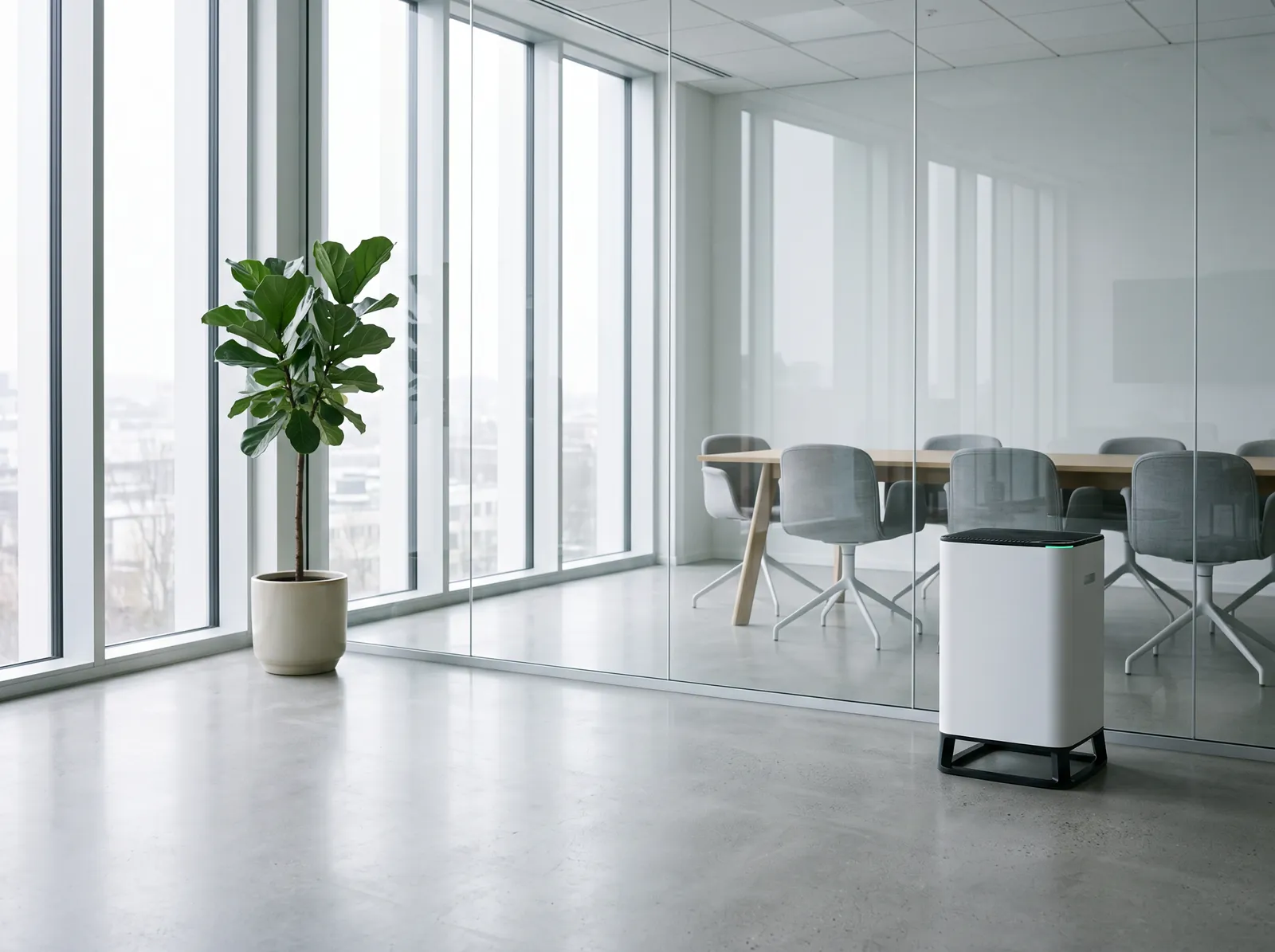
Work
Put clean air where people gather. A unit goes from box to running in minutes, while a full HVAC upgrade takes months of planning.
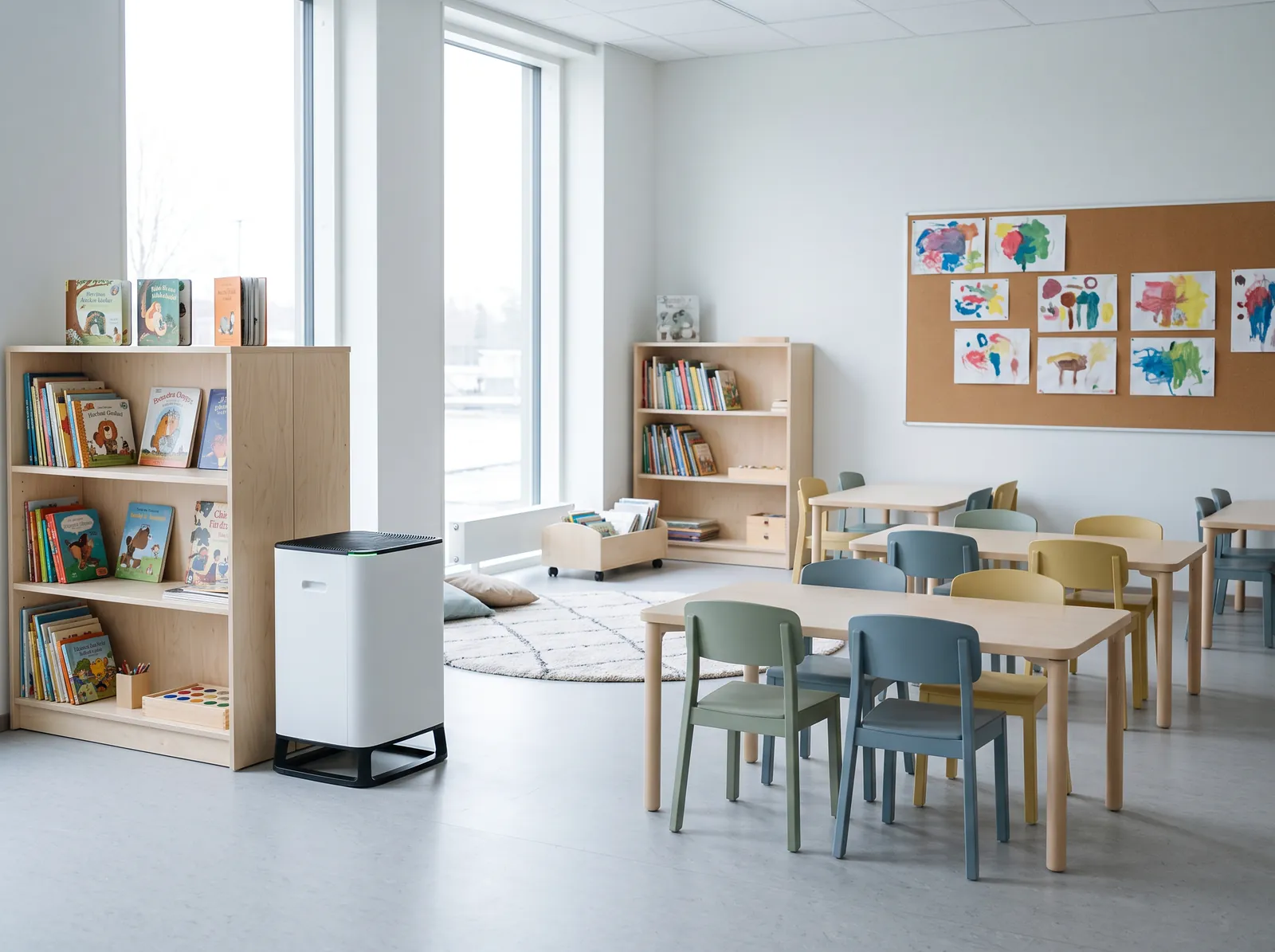
School
School HVAC was built to protect equipment, and it lets airborne viruses and PM2.5 through. Auto Mode raises the fan as classroom air changes through the day.
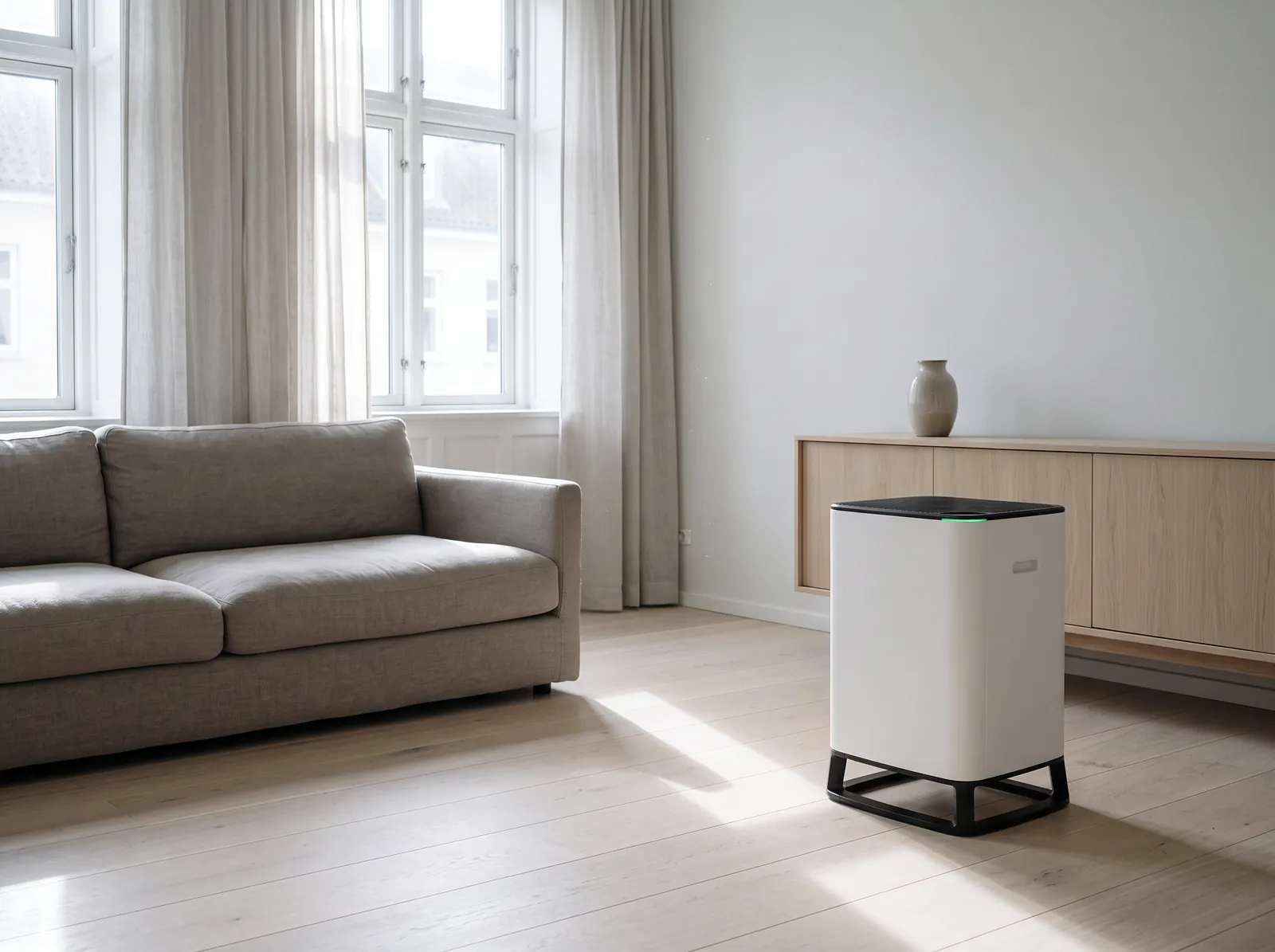
Home
Wildfire smoke, pollen season, a renovation next door. Auto Mode watches the built-in air quality sensor and responds when the air changes.
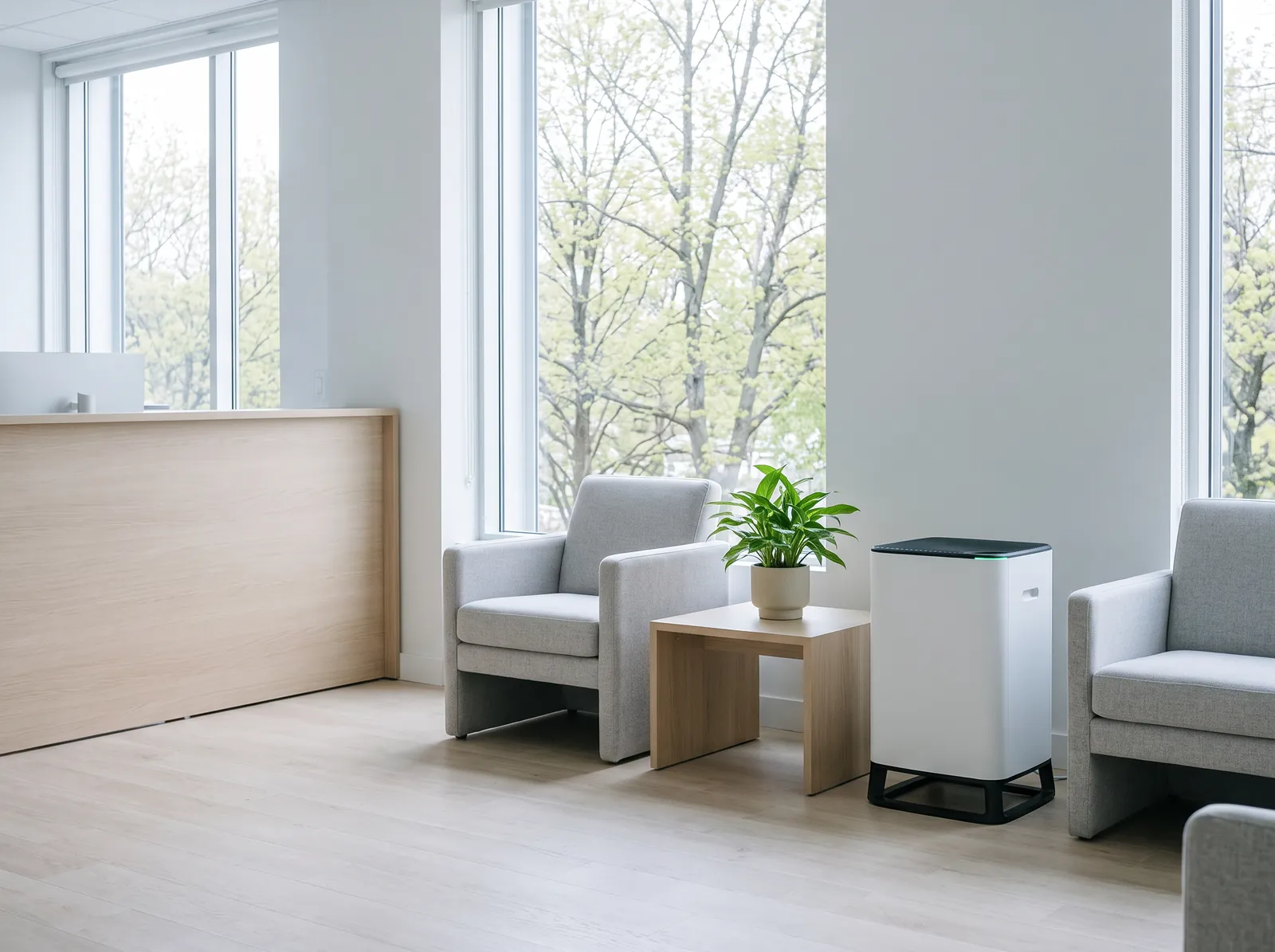
Care
Dental work puts fine and ultrafine particles into the air that building HVAC was never designed to remove. Brio clears them in the room where they start.
Brio 650, all the way around
Brio 650 breathes in all the way around its raised base and out through the top, so it works in a corner, beside a desk or in the middle of a room.
For facility teams
ASHRAE Standard 241 sets clean air targets for the control of infectious aerosols. Independent testing at ARE Labs confirms Brio 650 counts as an equivalent clean air source, so you can reach the target room by room at far lower cost than new HVAC.
Request the clean air calculatorThe APART platform
APART stands for Advanced Particle Removal Technology. Research scientists at the University of Washington's Sensors, Energy and Automation Laboratory developed it, and Agentis Air holds the exclusive license.
HVAC pilot · University of Washington
The prototype's particle load capacity supported a full year between cartridge changes. Energy efficiency and a safe workplace stopped being a trade.
Air exchanger retrofit
A custom APART filter replaced the mechanical filter in a popular air exchanger. The energy saved paid for a lower power, quieter fan.
Platform patents are owned by the University of Washington and exclusively licensed to Agentis Air, with coverage in the United States, Canada, Europe and Asia. Explore the technology
It is by far, the quietest unit any of us have seen in operation. The noise level is undetectable in our busy office. People stop and look inside to see if the unit is actually running!
From the lab notebook
HVAC
HVAC filtration was designed to protect machinery. Pulling fine and ultrafine particles out of a room was never its job.
Read the articleNoise
A purifier that gets switched off cleans nothing. The three design moves that keep Brio 650 running in a busy office.
Read the articleOzone
Ozone gets in through open doors, leaky envelopes and ventilation air. HVAC systems do not reduce it.
Read the article